Host-parasite biochemical reprogramming in malaria: clinical biochemistry, pathogenesis, and biomarker implications
Host-parasite biochemical reprogramming in malaria
DOI:
https://doi.org/10.54117/9jhp8e58Keywords:
Plasmodium falciparum, Severe malaria, Clinical biochemistry, Biochemical markers, Host–parasite interaction, Oxidative stress, Metabolic reprogramming, Metabolomics, Proteomics, Multi-omics, Artificial intelligence, Biomarker discovery, Prognostic biomarkersAbstract
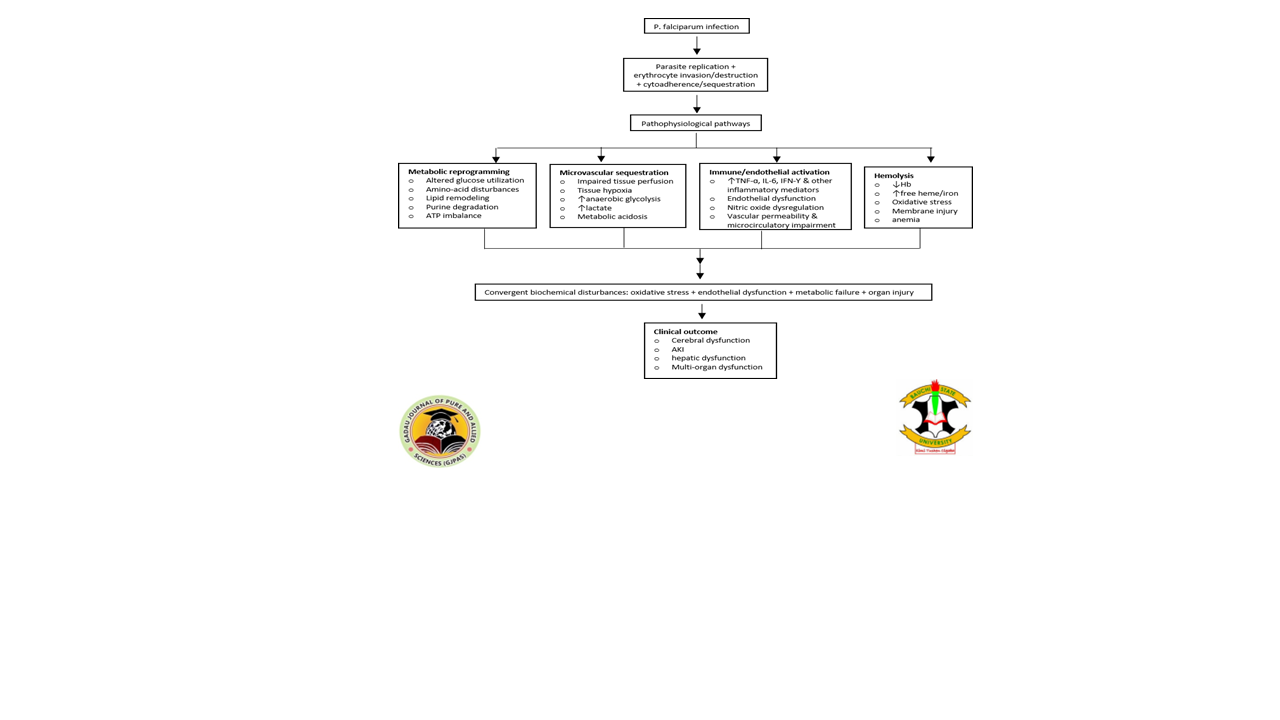
Severe malaria specifically cause plasmodium falciparum infection is the leading cause of morbidity and mortality in endemic region like Nigeria. The severe malaria disease is characterized by excessive alterations in several clinical biochemical parameters that demonstrate the Pathophysiology process behind the alterations. This review summarizes the integrated analysis of the mechanism underling the major biochemical changes associated with plasmodium falciparum infection, including hemolysis-induced anemia (both intravascular and extravascular), hepatic injury and dysfunction, renal injury and impairment, metabolic abnormalities, electrolyte imbalance and hypoglycemia. These alterations are the byproducts of complex interaction between plasmodium falciparum and its human host arising from erythrocyte destruction, microvascular sequestration, tissue hypoxia and unregulated immune response.
The review also highlighted in detail the observed biochemical derangement in severe malaria infection is amplified by oxidative stress and inflammatory cytokines which further contribute to multiple organ dysfunctions. Furthermore, routine biochemical markers such as serum lactate, bilirubin, creatinine and liver enzymes are analyzed for their clinical relevance in severity assessment, prognosis and therapeutic monitoring. Discovery of novel biomarkers with improved sensitivity for early detection of severity and risk stratification from recent finding in metabolomics and proteomic profiling were also analyzed in this review.
Current scientific progress stress the need to integrate conventional clinical biochemistry analysis with genomics, proteomics, and artificial intelligence-based predictive models to enhance diagnostic precision and enable personalized disease management. Collectively, this approach represents a major avenue for future research with significant potential to transform clinical diagnosis, improved prognostic accuracy and targeted therapeutic intervention in severe malaria.
References
alters their motility, infectivity and reduces immune activation in vitro. Malaria Journal, 23, 111.
doi:https://doi.org/10.1186/s12936-024-04946-7.
Vaughan, A. M. (2017). Malaria Parasite Liver Infection and Exoerythrocytic Biology. Cold. Spring Harbor perspectives in medicine, 7(6), a025486. doi:https://doi.org/10.1101/cshperspect.a025486.
White, N. (2018). Anemia and Malaria. Malaria Journal, 17, 371. doi:doi.org/10.1186/s12936-018-8.
White, N. (2022). Severe Malaria. Malaria Journal, 2022, 284.
Wiser, M. F. (2023). Knobs, Adhesion, and Severe Falciparum Malaria. tropical medicine and infectious disease, 8(7), 353.
doi:doi:10.3390/tropicalmed8070353.
Wiser, M. F. (2024). The Digestive Vacuole of the Malaria Parasite: A Specialized Lysosome. athogens (Basel, Switzerland), 13(2), 182. doi:doi:10.3390/pathogens13030182.
World Health Organization. (2024). WHO Malaria Policy Advisory Group (MPAG) meeting report, 4, 5 and 7. Geneva: WHO.
Retrieved from. https://iris.who.int/server/api/core/bitstreams/ebeea27d-2ce7-43a0-be60 ffb830dbe382/content.
World Health Organization. (2024). World malaria report. Geneva: WHO. Retrieved from https://cdn.who.int/media/docs/default-source/malaria/world-malaria-reports/world-malaria-report-2024-spreadview.pdf?.
World Health Organization. (2024). World malaria report. Geneva: WHO. Retrieved from https://cdn.who.int/media/docs/default-source/malaria/world-malaria-reports/world-malaria-report-2024-spreadview.pdf?.
World Health Organization. Malaria. (2025). Malaria. geneva: WHO. Retrieved from www.who.int/news-room/fact-sheets/detail/malaria.
Yakubu, M. N. (2024). Host metabolomic responses in recurrent P. vivax malaria. Scientific reports, 14(1), 7249.
doi:doi:10.1038/s41598-024-54231-5.
Downloads
Published
Issue
Section
License
Copyright (c) 2025 Gadau Journal of Pure and Allied Sciences

This work is licensed under a Creative Commons Attribution 4.0 International License.